


Trending
€57.50
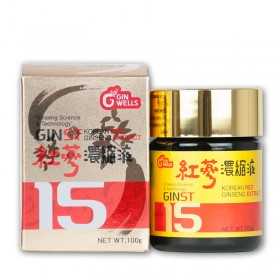
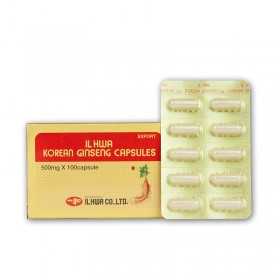
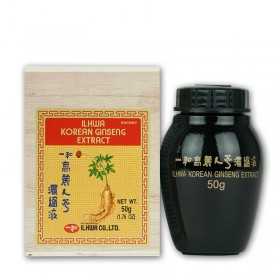
ILHWA GINST15 Korean Red Ginseng Extract
€61.46 €81.95 -25%
€62.50
€26.63 €35.50 -25%

€62.50
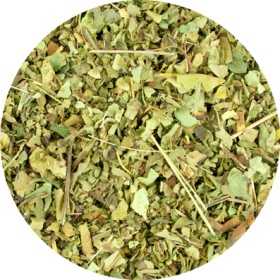
Lungwort - Pulmonaria officinalis
€5.91 €6.95 -15%
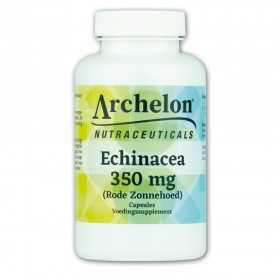
Echinacea (Red Coneflower) - 350 mg
€15.96 €19.95 -20%
€72.50
€54.95
€40.13 €53.50 -25%
Latest Blog

Best sellers
There are 394 products.
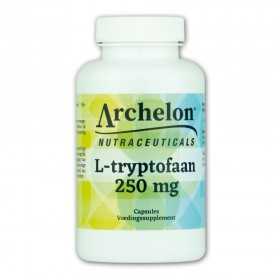
L-Tryptophan - 250 mg
Tryptophan is an essential amino acid, which means that the body cannot produce it itself and must therefore get it from food or supplementation. Tryptophan is found in meat, vegetables and fruit, among other things. Tryptophan is the only precursor of the neurotransmitter serotonin. Tryptophan also has several other functions.
€24.95
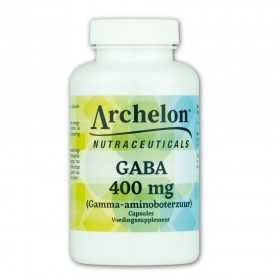
GABA (Gamma Aminobutyric Acid) - 400 mg
GABA (gamma-aminobutyric acid) is an amino acid found naturally in foods like broccoli, spinach, seeds, nuts, potatoes, bananas, onions, and eggs. Our GABA supplement offers an easy way to supplement with this amino acid as part of a varied diet. The capsules are formulated with pure GABA, making it easy to incorporate into your daily diet.
€22.95
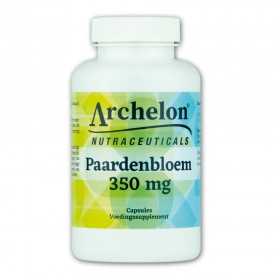
Dandelion - 350 mg
Dandelion (Taraxacum officinale) is a plant known for centuries and used both in its wild form and in nutritional supplements. Both the root and the above-ground parts contain a wide range of natural substances. Dandelion contains bitter substances, phytosterols, fatty acids such as linoleic acid, linolenic acid, palmitic acid, and oleic acid, flavonoids, various B vitamins, vitamin C, beta-carotene, and minerals such as calcium, chromium, magnesium, zinc, manganese, selenium, and sulfur.
Fresh dandelion leaves can be added to salads, and the flowers can be used as garnish or made into herbal tea. Its diverse nutritional composition makes dandelion an interesting addition to a varied diet.
Fresh dandelion leaves can be added to salads, and the flowers can be used as garnish or made into herbal tea. Its diverse nutritional composition makes dandelion an interesting addition to a varied diet.
€19.95
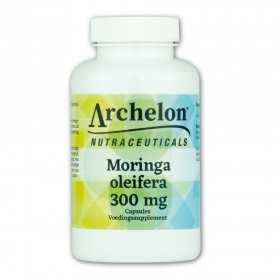
Moringa oleifera - 300 mg
Moringa oleifera is a fast-growing tree native to parts of Africa and Asia. Also known as the "moringa tree," it is traditionally used as a food source in various cultures. The leaves, in particular, are valued for their diverse range of natural nutrients.Moringa leaves naturally contain a variety of nutrients, including plant proteins, fiber, vitamins, minerals, amino acids, and plant compounds such as polyphenols and carotenoids. This versatile composition means moringa is used worldwide in powders, capsules, and other food products.
€19.95
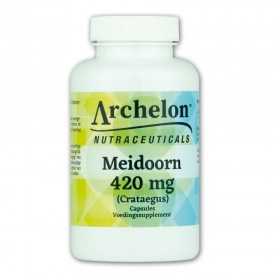
Hawthorn (Crataegus) - 420 mg
The two-styled hawthorn (Crataegus laevigata) is a thorny shrub or small tree native to large parts of Europe. The plant is recognizable by its white blossoms in spring and red berries in autumn, which are also known as "whitebeams" due to their texture.
The leaves and flowering tops of the hawthorn are primarily used in dietary supplements. These parts naturally contain a broad spectrum of plant compounds, including flavonoids, procyanidins, tannins, glycosides, vitamin C, and other natural antioxidants. The berries also contain these compounds to a lesser extent.
The leaves and flowering tops of the hawthorn are primarily used in dietary supplements. These parts naturally contain a broad spectrum of plant compounds, including flavonoids, procyanidins, tannins, glycosides, vitamin C, and other natural antioxidants. The berries also contain these compounds to a lesser extent.
€19.95

Curcuma - 500 mg
Turmeric, also known as yellow root, is a spice native to the tropical regions of India and Southeast Asia. The root powder is widely used in Asian cuisine and is known in the Netherlands as yellow root because of the striking yellow color it can impart to dishes like curry and mustard. Turmeric contains natural pigments and bioactive compounds and is used in nutritional supplements as part of a varied and balanced diet.
€19.95
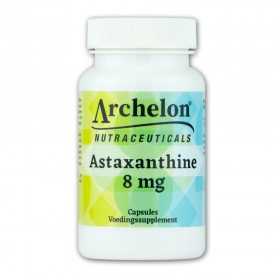
Astaxanthin - 8 mg
Astaxanthin is a naturally occurring carotenoid found in algae (Haematococcus pluvialis), as well as in various vegetables, fruits, herbs, and plants. It is a deep red pigment that belongs to the carotenoid group.
The algae Haematococcus pluvialis is known for its high natural astaxanthin content and is also called "blood rain algae" because of its color. Aquatic animals that consume this algae, such as krill, salmon, char, shrimp, lobster, and crab, acquire their characteristic pinkish-red color from it.
Astaxanthin is used as a colorant and ingredient in foods and supplements and is naturally derived.
The algae Haematococcus pluvialis is known for its high natural astaxanthin content and is also called "blood rain algae" because of its color. Aquatic animals that consume this algae, such as krill, salmon, char, shrimp, lobster, and crab, acquire their characteristic pinkish-red color from it.
Astaxanthin is used as a colorant and ingredient in foods and supplements and is naturally derived.
€32.95
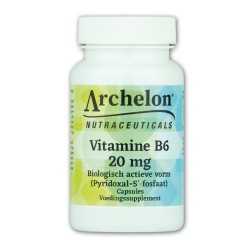
Vitamin B6 (P-5-F) (Biologically Active Form) - 20mg
Vitamin B6 (pyridoxal-5'-phosphate, P-5'-P) is the biologically active form of vitamin B6. Unlike pyridoxine HCL, this form does not need to be converted in the body. P-5'-P is used in the body by enzymes involved in various biochemical reactions, including amino acid and glycogen metabolism. Vitamin B6 occurs naturally in foods such as meat, fish, potatoes, bananas, and whole grains.
€22.95
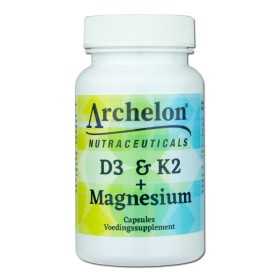
Vitamin D3 - 2,500 IU - 62.5 mcg & (Menaquinone-7) 25 mcg & Magnesium malate 100 mg
Vitamin D is a fat-soluble vitamin that the body can produce itself under the influence of sunlight (UV radiation). Vitamin D is also found in foods such as oily fish (herring, salmon, mackerel), meat, and eggs. The production and absorption of vitamin D can vary from person to person, depending on skin pigmentation, age, and sunlight exposure.
Vitamin K2, in the form of menaquinone-7, is a form of vitamin K that remains in the body for a long time. Vitamin K2 is available in foods such as fermented cheese, eggs, and meat.
Magnesium malate is a compound of magnesium and malic acid. Magnesium is a mineral that occurs naturally in foods such as whole grains, vegetables, nuts, meat, and dairy products like cottage cheese and yogurt.
Vitamin K2, in the form of menaquinone-7, is a form of vitamin K that remains in the body for a long time. Vitamin K2 is available in foods such as fermented cheese, eggs, and meat.
Magnesium malate is a compound of magnesium and malic acid. Magnesium is a mineral that occurs naturally in foods such as whole grains, vegetables, nuts, meat, and dairy products like cottage cheese and yogurt.
€36.95
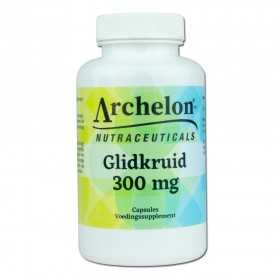
Skullcap - 300 mg
Skullcap (Scutellaria) is a versatile genus of both annual and perennial plants, belonging to the Lamiaceae family. The genus includes about two hundred species, all of which are characterized by their characteristic, calyx-shaped flowers. These flowers are distinguished by clearly visible upper and lower lips. The name "Scutellaria" is derived from the Latin word "scutella", which means "small shield" or "saucer", and refers to the shape of the calyx.
€21.95
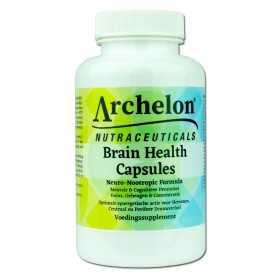
Brain Health Capsules
Brain Health Capsules are a carefully formulated combination of herbs, vitamins, minerals, and enzymes. These capsules are designed to complement a varied diet and a healthy lifestyle.
The ingredients are selected with an eye for balance and coherence, making Brain Health Capsules easy to take and flexible to fit into your daily routine. These capsules are suitable for people who value a comprehensive, plant-based formula without unnecessary additives.
The ingredients are selected with an eye for balance and coherence, making Brain Health Capsules easy to take and flexible to fit into your daily routine. These capsules are suitable for people who value a comprehensive, plant-based formula without unnecessary additives.
€54.95
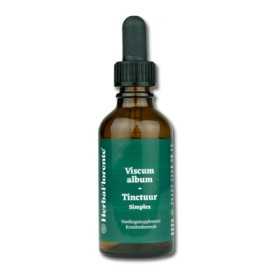
Mistletoe Tincture - Viscum album Tincture
Single herbal tincture made with dried herb of Viscum album (Mistletoe).
Mistletoe (Viscum album) is an evergreen plant belonging to the sandalwood family (Santalaceae). It is also known by common names such as mistletoe, mistletoe, and birdlime. Mistletoe is native to Europe, Northwest Africa, and West and Central Asia. It is a semi-parasitic plant that grows on various types of trees and shrubs, where it extracts water and minerals while photosynthesizing.
Mistletoe (Viscum album) is an evergreen plant belonging to the sandalwood family (Santalaceae). It is also known by common names such as mistletoe, mistletoe, and birdlime. Mistletoe is native to Europe, Northwest Africa, and West and Central Asia. It is a semi-parasitic plant that grows on various types of trees and shrubs, where it extracts water and minerals while photosynthesizing.
€9.95
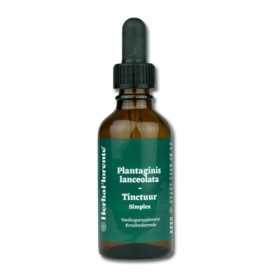
Plantain Narrow Tincture - Plantago lanceolata Tincture
Single herbal tincture made with dried herb of Plantaginis (Plantago) lanceolata (Plantain Narrow).
Ribwort plantain (Plantago lanceolata) is a native plant found in Europe, parts of Asia, North Africa, and North America. It prefers moist, sandy soil and can be found in grasslands, along roads and railways, and even between paving stones.
Ribwort plantain can reach a height of about 75 centimeters and has long, narrow leaves. Starting in May, the plant blooms with light green flower spikes bearing striking white stamens.
Ribwort plantain (Plantago lanceolata) is a native plant found in Europe, parts of Asia, North Africa, and North America. It prefers moist, sandy soil and can be found in grasslands, along roads and railways, and even between paving stones.
Ribwort plantain can reach a height of about 75 centimeters and has long, narrow leaves. Starting in May, the plant blooms with light green flower spikes bearing striking white stamens.
€9.95
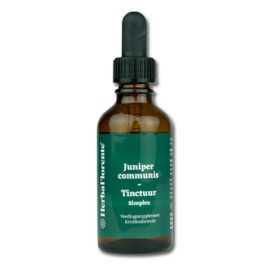
Juniper Tincture - Juniper communis Tincture
Single herbal tincture made with dried berries of Juniper communis (Juniper).
The juniper (Juniperus communis) is a conifer native to Europe, Asia, and North America. The plant bears both flowers and berries, which vary in color from green to black as they ripen. The name Juniperus derives from the Celtic word juneprus, meaning rough, prickly, or bitter, while communis means "common."
The black berries of the juniper have a characteristically bitter and aromatic flavor. It takes about three years for the berries to fully ripen: in the first year, the flowers appear, in the second year they turn green, and in the third year they turn blue and then black or dark purple.
The juniper (Juniperus communis) is a conifer native to Europe, Asia, and North America. The plant bears both flowers and berries, which vary in color from green to black as they ripen. The name Juniperus derives from the Celtic word juneprus, meaning rough, prickly, or bitter, while communis means "common."
The black berries of the juniper have a characteristically bitter and aromatic flavor. It takes about three years for the berries to fully ripen: in the first year, the flowers appear, in the second year they turn green, and in the third year they turn blue and then black or dark purple.
€9.95
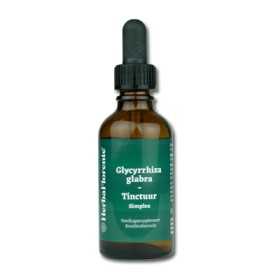
Licorice Tincture - Glycyrrhiza glabra Tincture
Single herbal tincture made with dried root of Glycyrrhiza glabra (Licorice).
Licorice (Glycyrrhiza glabra) is a versatile herb that has been used for centuries in various traditions, including Ayurvedic culture. The plant is cultivated in various parts of the world, such as Europe, Asia, and the Middle East, and can also grow in the Netherlands. The roots take three to four years to mature before they can be harvested.
Besides the roots, licorice leaves are also used, for example, in making tea. Licorice is known for its characteristic sweet flavor, which is due in part to the natural substance glycyrrhizin. It is widely used in foods and herbal preparations.
Licorice (Glycyrrhiza glabra) is a versatile herb that has been used for centuries in various traditions, including Ayurvedic culture. The plant is cultivated in various parts of the world, such as Europe, Asia, and the Middle East, and can also grow in the Netherlands. The roots take three to four years to mature before they can be harvested.
Besides the roots, licorice leaves are also used, for example, in making tea. Licorice is known for its characteristic sweet flavor, which is due in part to the natural substance glycyrrhizin. It is widely used in foods and herbal preparations.
€9.95
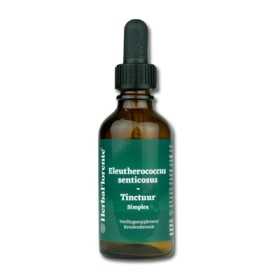
Siberian Ginseng Tincture - Eleutherococcus senticosus Tincture
Single herbal tincture made with dried root of Eleutherococcus senticosus (Siberian ginseng).
Siberian ginseng (Eleutherococcus senticosus) is a shrubby plant native to parts of Russia, China, Korea, and Japan. The plant belongs to the Araliaceae family and is botanically related to, but distinct from, the better-known Panax species such as Korean ginseng (Panax ginseng) and American ginseng (Panax quinquefolius).
The roots of Siberian ginseng have long been mentioned in East Asian and Russian botanical literature. These historical and cultural sources describe the plant as part of traditional practices. This long history of use has also led to Siberian ginseng becoming known beyond its native range.
Siberian ginseng (Eleutherococcus senticosus) is a shrubby plant native to parts of Russia, China, Korea, and Japan. The plant belongs to the Araliaceae family and is botanically related to, but distinct from, the better-known Panax species such as Korean ginseng (Panax ginseng) and American ginseng (Panax quinquefolius).
The roots of Siberian ginseng have long been mentioned in East Asian and Russian botanical literature. These historical and cultural sources describe the plant as part of traditional practices. This long history of use has also led to Siberian ginseng becoming known beyond its native range.
€9.95
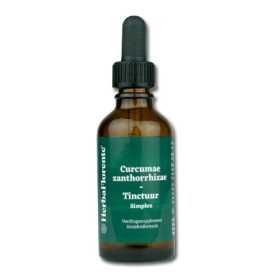
Tumeric zanthorrhiza Tincture - Curcumae zanthorrhizae Tincture
Single herbal tincture made with dried root of Curcumae zanthorrhizae (Tumeric).
Turmeric, also known as Javanese ginger (Curcuma xanthorrhiza), is a tropical plant native to India and Southeast Asia. The root of this plant has been used for centuries and is best known in powdered form. In the Netherlands, turmeric is also known as yellow root (gelukkigroot) because of its intense yellow color, which is used in curry mixtures and mustard, among other things.
Turmeric plays an important role in various Asian cuisines, where it is valued for its color, aroma, and characteristic flavor. Besides its culinary uses, turmeric is traditionally described in historical and cultural sources from India and Indonesia, where the root played an integral role in daily life.
Turmeric, also known as Javanese ginger (Curcuma xanthorrhiza), is a tropical plant native to India and Southeast Asia. The root of this plant has been used for centuries and is best known in powdered form. In the Netherlands, turmeric is also known as yellow root (gelukkigroot) because of its intense yellow color, which is used in curry mixtures and mustard, among other things.
Turmeric plays an important role in various Asian cuisines, where it is valued for its color, aroma, and characteristic flavor. Besides its culinary uses, turmeric is traditionally described in historical and cultural sources from India and Indonesia, where the root played an integral role in daily life.
€9.95
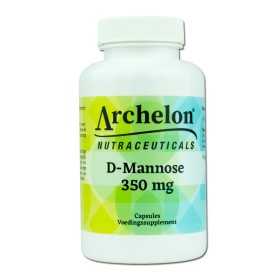
D-Mannose - 350mg
D-mannose is a simple sugar (monosaccharide) structurally related to glucose. In dietary supplements, D-mannose is often combined with cranberry extract as part of a varied and balanced diet.
€21.95
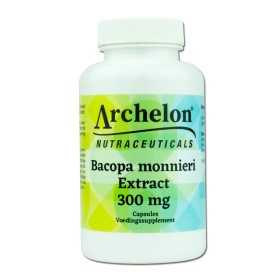
Bacopa monnieri Extract - 300 mg
Bacopa monnieri is a plant that has been used for thousands of years in the Ayurvedic tradition. In India, the herb is known as Brahmi, a Sanskrit term that refers to awareness and wisdom.
Our Bacopa monnieri capsules contain an extract standardized to 50% bacosides, the characteristic plant compounds of Bacopa monnieri. The extract is carefully produced to ensure a consistent composition.
Bacopa monnieri is a herb native to humid regions and is traditionally valued in various herbal systems.
Our Bacopa monnieri capsules contain an extract standardized to 50% bacosides, the characteristic plant compounds of Bacopa monnieri. The extract is carefully produced to ensure a consistent composition.
Bacopa monnieri is a herb native to humid regions and is traditionally valued in various herbal systems.
€26.95
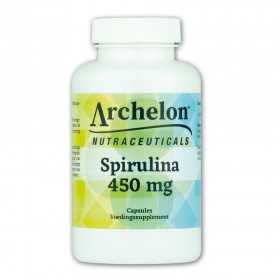
Spirulina - 450 mg
Spirulina is a blue-green, single-celled algae that grows in warm, freshwater. This microscopic algae has spiral-shaped strands and contains natural pigments such as chlorophyll (green) and phycocyanin (blue).
Spirulina naturally contains a broad spectrum of nutrients, including protein, B-complex vitamins, vitamin E, carotenoids, iron, manganese, zinc, and essential fatty acids such as gamma-linolenic acid. It is known as a rich source of beta-carotene and other carotenoids. Spirulina is often included in nutritional supplements and can be included as part of a varied and balanced diet.
Spirulina naturally contains a broad spectrum of nutrients, including protein, B-complex vitamins, vitamin E, carotenoids, iron, manganese, zinc, and essential fatty acids such as gamma-linolenic acid. It is known as a rich source of beta-carotene and other carotenoids. Spirulina is often included in nutritional supplements and can be included as part of a varied and balanced diet.
€19.95
Resveratrol - 100 mg
Reishi (Ganoderma lucidum) is a mushroom that has been used in Japanese and Chinese herbalism for over two thousand years. Today, reishi is cultivated under controlled conditions in greenhouses, ensuring consistent quality comparable to wild reishi. The mushroom contains various natural compounds, including polysaccharides, triterpenes, peptides, antioxidants, iron, and selenium. Reishi is often used in powders, capsules, and other food products because of this composition.
€32.95

Cranberry Extract - 400 mg
Cranberry (Vaccinium macrocarpon). Cranberries are small, red berries that naturally contain anthocyanins, pigments belonging to the flavonoid family and responsible for their vibrant color. Anthocyanins are found in many vegetables, fruits, and herbs. Cranberries also provide a wide range of nutrients, including vitamins, minerals, and antioxidants, and are often included in dietary supplements as part of a varied and balanced diet.
€34.95

Biotin - 1,000 mcg
La biotine contribue au métabolisme énergétique normal et au fonctionnement normal du système nerveux. Elle contribue également au bon fonctionnement psychologique et au maintien de cheveux, d'une peau et de muqueuses normales.
€14.95
Vitamin D3 - 3,000 IU - 75 mcg & Vitamin K2 (Menaquinone-7) 200 mcg
Vitamin D is a fat-soluble vitamin that the body can produce naturally under the influence of sunlight (UV radiation). Vitamin D is also found in foods such as oily fish (herring, salmon, mackerel), meat, and eggs. The production and absorption of vitamin D can vary from person to person, depending on skin pigmentation, age, and sunlight exposure.
Vitamin K2, in the form of menaquinone-7, is a form of vitamin K that remains in the body for a long time. Vitamin K2 is available in foods such as fermented cheese, eggs, and meat.
Vitamin K2, in the form of menaquinone-7, is a form of vitamin K that remains in the body for a long time. Vitamin K2 is available in foods such as fermented cheese, eggs, and meat.
€32.95