


Trending
€57.50
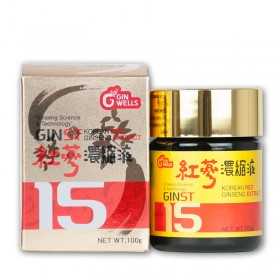
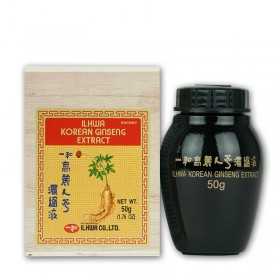
ILHWA GINST15 Korean Red Ginseng Extract
€61.46 €81.95 -25%

€62.50

€26.63 €35.50 -25%

€62.50
Lungwort - Pulmonaria officinalis
€5.91 €6.95 -15%

Echinacea (Red Coneflower) - 350 mg
€15.96 €19.95 -20%

€72.50

€54.95
€40.13 €53.50 -25%
Latest Blog

Best sellers
There are 394 products.
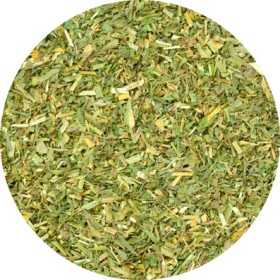
Alfalfa - Medicago sativa
Lucerne (Medicago sativa), also known as alfalfa, is a perennial plant that can live between five and twelve years, depending on the variety and climate. With a height of up to one meter and clusters of small purple flowers, the plant resembles clover. The plant has a deep and powerful root system that can extend up to 4.5 meters.
Lucerne is native to Europe and is grown worldwide as animal feed. In the Netherlands, alfalfa is mainly dried artificially for the production of protein-rich animal feed.
Lucerne is native to Europe and is grown worldwide as animal feed. In the Netherlands, alfalfa is mainly dried artificially for the production of protein-rich animal feed.
€2.00
From: €2.00
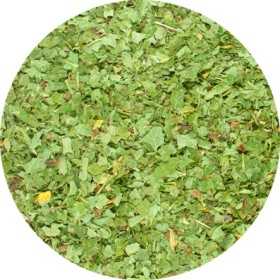
Blackcurrant - Ribes nigrum
The blackcurrant (Ribes nigrum L.) is a plant native to Northern Asia, Northern Europe, and Central Europe. The name "nigrum" refers to the dark color of the berries, while "ribes" refers to the berries themselves.
The blackcurrant thrives in moist, nutrient-rich soil and is resistant to cold and humidity. It is common in the Netherlands and Belgium.
Various parts of the plant are traditionally used, including the berries, seeds, and leaves. The berries contain vitamins and minerals, while the leaves are rich in natural plant compounds such as bioflavonoids, anthocyanins, and tannins. The use of blackcurrant leaf (Folium Ribis nigri) has a long history in culinary and traditional applications.
The blackcurrant thrives in moist, nutrient-rich soil and is resistant to cold and humidity. It is common in the Netherlands and Belgium.
Various parts of the plant are traditionally used, including the berries, seeds, and leaves. The berries contain vitamins and minerals, while the leaves are rich in natural plant compounds such as bioflavonoids, anthocyanins, and tannins. The use of blackcurrant leaf (Folium Ribis nigri) has a long history in culinary and traditional applications.
€2.95
From: €2.95
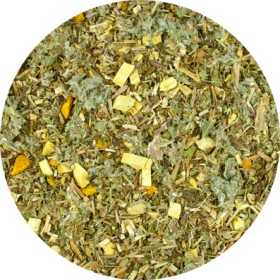
Liver Herbal Tea
Herbal tea composed of various herbs
€4.95
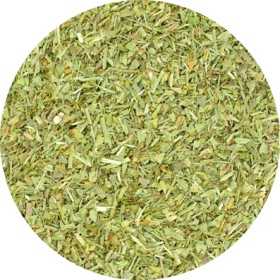
Shepherds Purse - Capsella Bursa postoris
Shepherd's purse (Capsella bursa-pastoris) is a plant in the Brassicaceae family. It is an annual or biennial, upright-growing plant that can reach a height of approximately 5 to 60 centimeters. The plant is winter-hardy and usually has a woody taproot. The sinuously serrated leaves form a rosette around the spindle-shaped root.
Shepherd's purse is common in temperate regions and grows in a variety of locations, such as fields, roadsides, and fallow land. Its distinctive heart-shaped seed pods make the plant easy to identify.
In historical and folklore sources, shepherd's purse is mentioned as part of traditional plant knowledge. The young rosette leaves are also used in culinary dishes. They can be used raw in salads or added to soups and other hot dishes.
Shepherd's purse is common in temperate regions and grows in a variety of locations, such as fields, roadsides, and fallow land. Its distinctive heart-shaped seed pods make the plant easy to identify.
In historical and folklore sources, shepherd's purse is mentioned as part of traditional plant knowledge. The young rosette leaves are also used in culinary dishes. They can be used raw in salads or added to soups and other hot dishes.
€2.00
From: €2.00
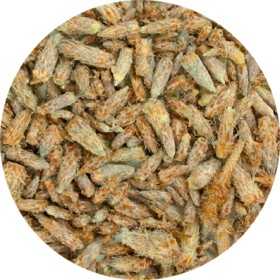
Pine (Seedlings) - Pinus silvestris
The Scots pine (Pinus sylvestris) belongs to the pine family (Pinaceae) and can reach an age of 200 to 300 years. This tree is known for its rich resin content and characteristic pine scent.
The needles and buds of the Scots pine contain natural compounds such as tannins, flavonoids, and vitamins. The tree's resin contains turpentine and a large number of monoterpenes, including α-pinene, β-pinene, and limonene, which are components of the tree's essential oil.
Scots pine is traditionally used in various applications, such as in aromatic products and in the production of pine oil. Both needles and buds are used in some traditional preparations for their fragrance and flavor.
The needles and buds of the Scots pine contain natural compounds such as tannins, flavonoids, and vitamins. The tree's resin contains turpentine and a large number of monoterpenes, including α-pinene, β-pinene, and limonene, which are components of the tree's essential oil.
Scots pine is traditionally used in various applications, such as in aromatic products and in the production of pine oil. Both needles and buds are used in some traditional preparations for their fragrance and flavor.
€2.80
From: €2.80

Cinnamon - Cinnamomi ceylon
Cinnamon (Cinnamomum ceylon) is an ancient spice extracted from the bark of the cinnamon tree. A section of the bark is carefully cut away, after which the rough outer layer is removed. The familiar cinnamon sticks or cinnamon powder are created from the inner layer of the bark. Cinnamon has been valued for centuries for its culinary and cultural uses.
In Asian and other cultures, cinnamon is traditionally used for various purposes, with its delightful aroma playing a significant role. This aroma is primarily determined by the volatile oil cinnamaldehyde. Cinnamon also naturally contains substances such as eugenol, coumarins, tannins, OPCs, and terpenes.
In Asian and other cultures, cinnamon is traditionally used for various purposes, with its delightful aroma playing a significant role. This aroma is primarily determined by the volatile oil cinnamaldehyde. Cinnamon also naturally contains substances such as eugenol, coumarins, tannins, OPCs, and terpenes.
€2.95
From: €2.95
Chlorella - Chlorella
Chlorella is a single-celled green algae belonging to the green algae group. This microscopic algae occurs naturally in freshwater environments such as lakes and rivers and is cultivated worldwide. The name chlorella is derived from the Greek words chloros (green) and ella (small), which refers to its color and size.
Chlorella is known for its natural composition and is described in nutritional and botanical sources as an algae that naturally contains various nutrients, including proteins, vitamins, minerals, and fatty acids. In addition, chlorella contains chlorophyll, the green pigment that plays an essential role in photosynthesis.
Furthermore, descriptions of chlorella often mention plant-based compounds such as beta-carotene and lutein.
Chlorella is known for its natural composition and is described in nutritional and botanical sources as an algae that naturally contains various nutrients, including proteins, vitamins, minerals, and fatty acids. In addition, chlorella contains chlorophyll, the green pigment that plays an essential role in photosynthesis.
Furthermore, descriptions of chlorella often mention plant-based compounds such as beta-carotene and lutein.
€4.60
From: €4.60
Nettle - Urticae dioica
Nettle (Urtica dioica) is a herbaceous plant found in many places and known for its stinging hairs when touched. Despite this characteristic, the plant has long been valued and used in various cultures. Nettle is used in culinary preparations such as soup and herbal tea.
The plant is native to large parts of Europe, Asia, and Africa. The Latin name Urtica dioica refers to the plant's stinging properties. Historical and botanical sources describe both the leaves and the roots as being traditionally collected and processed.
Both nettle leaf and root hold a firm place in herbal tradition. Due to their natural composition and long history, these parts of the plant have been mentioned for centuries in ethnobotanical and historical accounts.
The plant is native to large parts of Europe, Asia, and Africa. The Latin name Urtica dioica refers to the plant's stinging properties. Historical and botanical sources describe both the leaves and the roots as being traditionally collected and processed.
Both nettle leaf and root hold a firm place in herbal tradition. Due to their natural composition and long history, these parts of the plant have been mentioned for centuries in ethnobotanical and historical accounts.
€2.40
From: €2.40
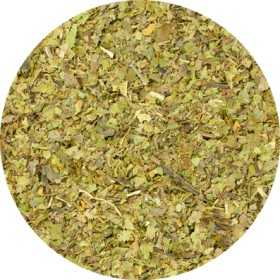
Walnut - Juglans regia
The Juglans regia, also known as walnut, walnut or walnut, belongs to the walnut family (Juglandaceae). This species is also known as common walnut or Persian walnut, to avoid confusion with the genus Juglans. Other species in the genus Juglans include the white walnut and the black walnut.
This deciduous tree can reach a height of up to 30 meters with a crown that can be more than 10 meters wide. The leaves are odd-pinnate and can be 25-40 cm long, consisting of five to nine leaflets per compound leaf. The three largest leaflets are located at the end of the leaf and measure 10-18 cm long and 6-8 cm wide. The leaflets at the base of the leaf are smaller, usually 5-8 cm long.
This deciduous tree can reach a height of up to 30 meters with a crown that can be more than 10 meters wide. The leaves are odd-pinnate and can be 25-40 cm long, consisting of five to nine leaflets per compound leaf. The three largest leaflets are located at the end of the leaf and measure 10-18 cm long and 6-8 cm wide. The leaflets at the base of the leaf are smaller, usually 5-8 cm long.
€2.00
From: €2.00
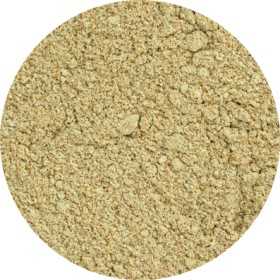
Milk Thistle (Seed) - Sylibum marianum, Cardui Mariae
Milk thistle (Silybum marianum), also known as milk thistle, is a spiny plant in the Asteraceae family. It originates in the Mediterranean region, but also grows in temperate regions such as the Netherlands and Belgium.
The plant is known for its striking, white-flecked leaves and purple flower heads. Milk thistle seeds contain natural compounds, including silymarin, a group of bioactive compounds considered antioxidants. Because of this composition, milk thistle is traditionally used in various food and herbal products.
The plant is known for its striking, white-flecked leaves and purple flower heads. Milk thistle seeds contain natural compounds, including silymarin, a group of bioactive compounds considered antioxidants. Because of this composition, milk thistle is traditionally used in various food and herbal products.
€2.00
From: €2.00
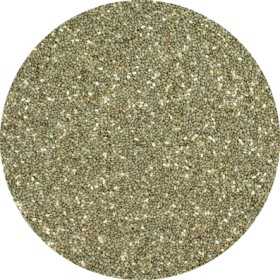
Chia seeds - Salviae Sem. Hispanica nigri albi
Chia, also known as Salvia hispanica, is a plant from the Lamiaceae family, originally from central and southern Mexico and Guatemala. The Aztecs cultivated this plant even before Columbus discovered America, and chia seeds were used as currency to the rulers. Today, chia is still prized in Mexico and Guatemala; the ground seeds are used in dishes, while whole seeds are often added to nutritious drinks.
The main purpose of growing chia is for its seeds, which are rich in omega-3 fatty acids. About 25-30% of the seed contains vegetable oil, including alpha-linolenic acid (ALA). Chia seeds are small and oval, about 1 mm in diameter, and have a color palette of brown, gray-black and white.
The main purpose of growing chia is for its seeds, which are rich in omega-3 fatty acids. About 25-30% of the seed contains vegetable oil, including alpha-linolenic acid (ALA). Chia seeds are small and oval, about 1 mm in diameter, and have a color palette of brown, gray-black and white.
€2.00
From: €2.00

Energy Herbal Tea
Herbal tea composed of various herbs
€5.95
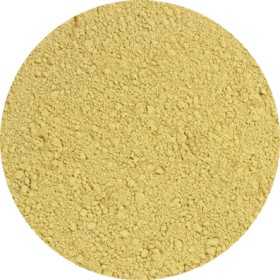
Licorice - Glycyrrhiza glabra, Liquiritiae
Licorice (Glycyrrhiza glabra) is a versatile herb that has been used for centuries in various traditions, including Ayurvedic culture. The plant is cultivated in various parts of the world, such as Europe, Asia, and the Middle East, and can also grow in the Netherlands. The roots take three to four years to mature before they can be harvested.
Besides the roots, licorice leaves are also used, for example, in making tea. Licorice is known for its characteristic sweet flavor, which is due in part to the natural substance glycyrrhizin. It is widely used in foods and herbal preparations.
Besides the roots, licorice leaves are also used, for example, in making tea. Licorice is known for its characteristic sweet flavor, which is due in part to the natural substance glycyrrhizin. It is widely used in foods and herbal preparations.
€2.00
From: €2.00
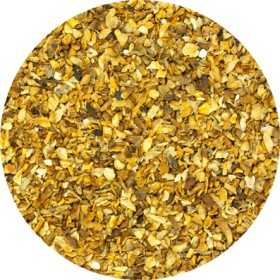
Chicory (Root) - Cichorium Intybus - Cut
Chicory (Cichorium) belongs to the composite family (Compositae or Asteraceae) and includes well-known vegetables such as chicory and endive. It is mainly consumed for health reasons.
Since the late years of the twentieth century, chicory roots have been cultivated not only for chicory, but also for the production of inulin and sweeteners, especially fructose. Both inulin (a dietary fiber) and fructose are widely used in the food industry.
Roasted chicory root is used as a coffee substitute or as an ingredient in coffee brewing. In the past, this was done out of necessity, such as during the Napoleonic blockade during the French occupation.
Since the late years of the twentieth century, chicory roots have been cultivated not only for chicory, but also for the production of inulin and sweeteners, especially fructose. Both inulin (a dietary fiber) and fructose are widely used in the food industry.
Roasted chicory root is used as a coffee substitute or as an ingredient in coffee brewing. In the past, this was done out of necessity, such as during the Napoleonic blockade during the French occupation.
€2.00
From: €2.00
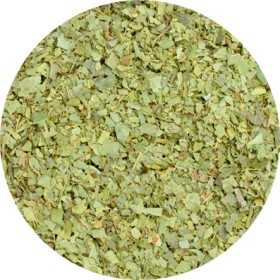
Boldoblad - Peumus boldus
Boldo (Peumus boldus) is an evergreen tree native to South America and other warmer regions, including Chile, Peru, Brazil, Ecuador, Argentina, and North Africa. It prefers sunny, dry locations and can reach a height of 8 meters and a width of 5 meters. Female trees produce drupes that were traditionally used as a spice.
Boldo leaves naturally contain various plant compounds, such as alkaloids, essential oils, flavonoids, and tannins. In Chile, the leaves have been mentioned in traditional customs for centuries and described in historical texts. Today, boldo is valued worldwide for its distinctive leaves, botanical characteristics, and cultural significance.
Boldo leaves naturally contain various plant compounds, such as alkaloids, essential oils, flavonoids, and tannins. In Chile, the leaves have been mentioned in traditional customs for centuries and described in historical texts. Today, boldo is valued worldwide for its distinctive leaves, botanical characteristics, and cultural significance.
€2.00
From: €2.00
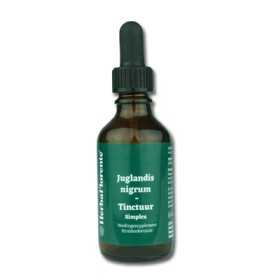
Black Walnut Tincture - Juglandis nigrum Tincture
Single herbal tincture made with the dried husk of Juglandis nigrum (Black Walnut).
The shell of the black walnut (Juglans nigra) is obtained from the immature fruit of the tree. The black walnut, also known as the "black nut," is a type of walnut native to the United States and Canada. The tree belongs to the walnut family.
The black walnut fruit is dark brown and has a distinctive aroma that differs from that of European walnuts. They are sometimes processed into extracts or tinctures, preserving their natural compounds. The fruit is edible and contains polyphenols, tannins, juglone, tannins, and omega fatty acids, among other nutrients.
The common walnut (Juglans regia) is widely used in food and culinary applications for its edible nuts.
The shell of the black walnut (Juglans nigra) is obtained from the immature fruit of the tree. The black walnut, also known as the "black nut," is a type of walnut native to the United States and Canada. The tree belongs to the walnut family.
The black walnut fruit is dark brown and has a distinctive aroma that differs from that of European walnuts. They are sometimes processed into extracts or tinctures, preserving their natural compounds. The fruit is edible and contains polyphenols, tannins, juglone, tannins, and omega fatty acids, among other nutrients.
The common walnut (Juglans regia) is widely used in food and culinary applications for its edible nuts.
€10.95
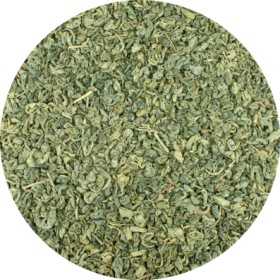
Green Tea - Gun Powder - Camellia sinensis
Gunpowder (zhūchá) is a Chinese green tea that gets its name from the grey-green, tightly rolled leaves that are reminiscent of 18th century gunpowder. Another possible explanation is that "freshly brewed" sounds like *gun-pao-da* in Chinese.
When steeped in hot water, the leaves unfold, giving the tea its characteristic grassy and sometimes smoky flavour.
In China, this tea is also known as pearl tea (珠茶). Gunpowder is mainly produced in the Ningbo region and is one of the most popular Chinese export teas. Nowadays, the balls are rolled by machine, except for the higher quality varieties, which are still made by hand.
When steeped in hot water, the leaves unfold, giving the tea its characteristic grassy and sometimes smoky flavour.
In China, this tea is also known as pearl tea (珠茶). Gunpowder is mainly produced in the Ningbo region and is one of the most popular Chinese export teas. Nowadays, the balls are rolled by machine, except for the higher quality varieties, which are still made by hand.
€2.95
From: €2.95
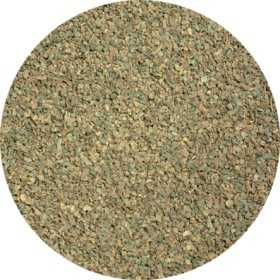
Bladderwrack Fine - Fucus vesiculosus
Out-of-Stock
Bladderwrack (Fucus vesiculosus) is a species of brown algae in the genus Fucus. It is found along the northern coasts of the Atlantic and Pacific Oceans and in the North Sea and Baltic Sea, often in kelp forests. The plant is notable for the air bladders that some varieties possess, which serve as flotation devices; however, there are also varieties without these bladders.
Bladderwrack belongs to the brown algae and naturally contains various polyphenols, including phlorotannins. The plant also contains minerals such as iodine, potassium, magnesium, calcium, and iron. Because of this natural composition, bladderwrack has been included in botanical and historical descriptions of seaweeds.
Bladderwrack belongs to the brown algae and naturally contains various polyphenols, including phlorotannins. The plant also contains minerals such as iodine, potassium, magnesium, calcium, and iron. Because of this natural composition, bladderwrack has been included in botanical and historical descriptions of seaweeds.
€2.50
From: €2.50
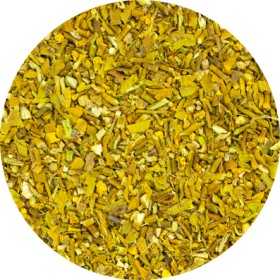
Mistletoe - Viscum alba
Mistletoe (Viscum album) is an evergreen plant belonging to the sandalwood family (Santalaceae). It is also known by common names such as mistletoe, mistletoe, and birdlime. Mistletoe is native to Europe, Northwest Africa, and West and Central Asia. It is a semi-parasitic plant that grows on various types of trees and shrubs, where it extracts water and minerals while photosynthesizing.
Throughout the centuries, mistletoe has become deeply intertwined with legends, rituals, and symbolism. Druids considered mistletoe growing on an oak tree sacred and associated it with the new year, fertility, and prosperity.
Throughout the centuries, mistletoe has become deeply intertwined with legends, rituals, and symbolism. Druids considered mistletoe growing on an oak tree sacred and associated it with the new year, fertility, and prosperity.
€2.00
From: €2.00

Menstrual Cramp Herbal Tea
Herbal tea composed of various herbs
€3.95
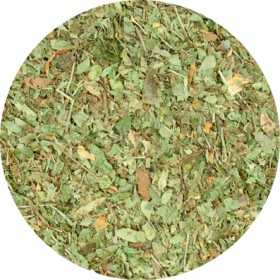
Sweet Woodruff - Asperula odorata
Sweet woodruff (Galium odoratum; synonym: Asperula odorata) is a perennial, hardy herbaceous plant in the Rubiaceae family. It grows naturally in deciduous woodlands and shady areas and is known for its delicate fragrance, which becomes more pronounced after drying.
The plant has a thin, creeping root with numerous stolons. The upright, square stem is delicate, unbranched, and typically grows 10 to 30 cm tall. The leaves are arranged in whorls of six to nine and are lance-shaped, 1 to 4 cm long. Botanically, only two of these are true leaves; the others are stipules that resemble each other in shape and function and together form a star-shaped cluster.
The plant has a thin, creeping root with numerous stolons. The upright, square stem is delicate, unbranched, and typically grows 10 to 30 cm tall. The leaves are arranged in whorls of six to nine and are lance-shaped, 1 to 4 cm long. Botanically, only two of these are true leaves; the others are stipules that resemble each other in shape and function and together form a star-shaped cluster.
€6.40
From: €6.40
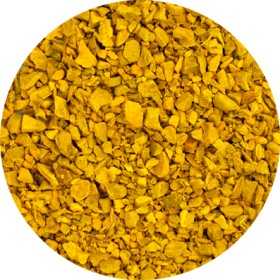
Tumeric zanth. - Curcumae zanthorrhizae - Cut
Turmeric, also known as Javanese ginger (Curcuma xanthorrhiza), is a tropical plant native to India and Southeast Asia. The root of this plant has been used for centuries and is best known in powdered form. In the Netherlands, turmeric is also known as yellow root (gelukkigroot) because of its intense yellow color, which is used in curry mixtures and mustard, among other things.
Turmeric plays an important role in various Asian cuisines, where it is valued for its color, aroma, and characteristic flavor. Besides its culinary uses, turmeric is traditionally described in historical and cultural sources from India and Indonesia, where the root played an integral role in daily life.
Turmeric plays an important role in various Asian cuisines, where it is valued for its color, aroma, and characteristic flavor. Besides its culinary uses, turmeric is traditionally described in historical and cultural sources from India and Indonesia, where the root played an integral role in daily life.
€2.00
From: €2.00

NAC (N-Acetyl-L-Cysteine) - 500 mg
N-acetyl-cysteine (NAC) is a form of the sulfur-containing semi-essential amino acid L-cysteine. This amino acid occurs naturally in foods such as dairy, meat, fruits, and vegetables. N-acetyl-cysteine is often included in supplements due to its improved bioavailability compared to L-cysteine.
NAC supplements can help supplement the total amino acid intake in the diet. The capsules are suitable for a varied and balanced diet and are easy to take as part of a daily nutritional supplement.
NAC supplements can help supplement the total amino acid intake in the diet. The capsules are suitable for a varied and balanced diet and are easy to take as part of a daily nutritional supplement.
€24.95
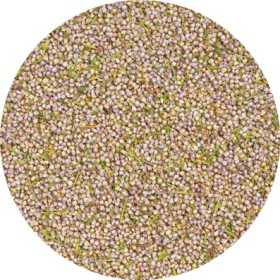
Shrub Heather (Flower) - Erica vulgaris
The Heather (Erica vulgaris - Calluna vulgaris) belongs to the heath family (Ericaceae) and grows throughout Europe, especially in Central and Northern Europe. It even reaches Western Siberia in the east. In the nineteenth century, Scottish immigrants brought the heather to Canada, from where it spread throughout North America. It is the only species in the genus Calluna, meaning it is a monotypic genus.
The shrub heath can grow to a height of 10-100 cm, sometimes even up to 150 cm in certain places. It has hermaphroditic, symmetrical flowers, with the calyx and petals being the same color. Purple flowers appear towards the end of the branches, creating the purple heaths from late July to early September.
The shrub heath can grow to a height of 10-100 cm, sometimes even up to 150 cm in certain places. It has hermaphroditic, symmetrical flowers, with the calyx and petals being the same color. Purple flowers appear towards the end of the branches, creating the purple heaths from late July to early September.
€2.80
From: €2.80